The Geraldine R. Dodge Foundation has approved more than $11 million in new grant and investment commitments — $6.08 million in Housing Choice and $5.05 million in Economic Mobility — as part of our commitment to closing the racial wealth gap in New Jersey. The grants reflect a deliberate, evidence-driven strategy to move families from economic exclusion toward financial security and autonomy. These grants and investments reflect the scale, breadth, and urgency of our mission to close the racial wealth gap in our state.
Why Housing and Economic Mobility
At the core of our strategy is a belief that housing stability and economic opportunity are inseparable. Communities of color in New Jersey face compounding barriers: renters in our target cities spend close to half of their monthly income on housing, homeownership rates remain suppressed by systemic barriers and a shortage of affordable supply, and residents are disproportionately locked out of the high-wage jobs and wealth-building tools that could change the trajectory of their families.
Our framework is designed to meet people across a spectrum of need from those experiencing the most acute forms of economic exclusion, to households that are housed and employed but remain dangerously close to the edge. The goal is not just inclusion but autonomy: giving families the agency to make meaningful choices about their lives.
On the housing side, that means investing simultaneously in renter durability, homeownership access and asset preservation, and the development of new affordable units. On the economic mobility side, it means funding career-connected workforce training, addressing non-discretionary costs that reduce incomes, financial wellbeing, and asset-building strategies that produce real, durable gains in income and wealth. This comprehensive approach is essential to making progress towards our mission of closing the racial wealth gap.
Spotlight: Unlocking Homeownership Through Down Payment and Savings Support
Research consistently shows that the primary barrier keeping first-generation buyers out of homeownership is not income. Instead, it is the inability to accumulate the upfront capital required for a down payment and closing costs. To address this we are excited about our support of the Princeton Federal Credit Union (PFCU), which is launching a First-Generation Homebuyer Initiative in Trenton and the surrounding Hamilton neighborhoods. PFCU’s model directly addresses this by pairing Individual Development Accounts (IDAs), a proven tool for building dedicated savings toward homeownership, with financial counseling, credit-building support, and responsible mortgage lending.
The program aims to open 65 IDA accounts, support 60 individuals through homebuyer education, and help at least 27 households achieve homeownership, unlocking a projected $11.75 million in total mortgage volume. As a regulated depository institution, PFCU can leverage every philanthropic dollar many times over through its balance sheet and convert grant capital into long-term mortgage relationships and sustained wealth creation.
“Princeton Federal Credit Union sits at an unusual crossroads,” says Dana Caragine, President & CEO of PFCU. “We hold the savings of members who choose us on principle, and we extend credit to neighbors the financial system has too often passed over. The Dodge Foundation’s support allows us to develop the products that put that shared capital to work for families who have long been just out of reach of homeownership, turning deposits into mortgages, savings plans, and down payments that build lasting wealth. For an institution founded on the idea that a community is strongest when it invests in its own, this is precisely the work we exist to do, from Princeton to Trenton and beyond.”
Spotlight: Meeting Workers Where They Are
A significant thread running through our Economic Mobility investments is a commitment to career-connected workforce training — programs that don’t just place people in jobs, but build the conditions for lasting economic stability. What distinguishes these programs from generic job training is their wraparound design: industry-informed curricula paired with coaching, mentorship, financial literacy, and in the strongest cases, direct connections to employers.
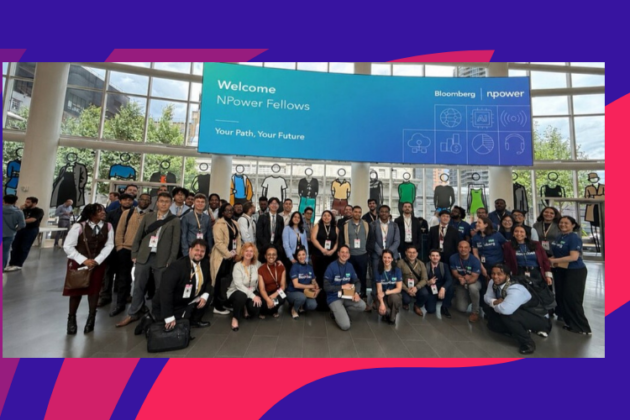
Several of these investments are explicitly designed to reach populations that most workforce programs never reach, including people with justice involvement, limited education, and unstable housing. Among them is a grant to The Father Center of New Jersey, which works primarily with men of color in Camden and Trenton who face compounding barriers to employment. Using the evidence-based “24/7 Dad” framework, the Father Center pairs job training and credentialing with financial literacy, case management, and wraparound legal and housing supports — recognizing that for this population, a credential alone is rarely enough. The program aims to train and credential at least 100 participants and place 40 in full-time, quality jobs, while also tracking measurable improvements in financial health and credit scores. Similarly, NPower, anchored in Newark and expanding to Trenton and Camden, provides tuition-free IT and cybersecurity training to low-income residents, including military-connected veterans, through an evidence-based model that has been shown to deliver strong placement rates and wage growth in high-demand fields.
“With this catalytic support from the Geraldine R. Dodge Foundation, NPower New Jersey will be able to empower more NJ communities to thrive in the digital economy through transformative IT training, creating pathways to life-changing economic prosperity,” said Helen Kogen, Executive Director of NPower New York/New Jersey Metro.
Spotlight: Building Renter Power in Camden
An investment in the Healthy Homes Initiative tackles one of the most insidious barriers facing low-income renters in Camden: a legal procedural requirement known as a “Marini bond.” Under New Jersey law, tenants facing eviction cannot raise the uninhabitable conditions of their homes as a legal defense unless they can first deposit all rent owed to the court. For families with limited resources, this rule effectively strips them of their legal rights even when landlords are clearly in the wrong.
The Healthy Homes Initiative was piloted in North Jersey as a joint venture of Newark Communities Solutions, a program of the Center for Justice Innovation, and Rutgers Law School Housing Justice and Tenant Solidarity Clinic (Newark), and our most recent investment will allow Rutgers Law School Housing Advocacy Clinic (Camden), the Camden Coalition, and Make the Road NJ, to expand the program to Camden. With demonstrated, previous success in North Jersey, HHI will deploy a revolving bond fund alongside legal representation so that tenants can participate in habitability hearings. Paired with Know Your Rights trainings for residents and community organizations, the model ensures that Camden’s renters — more than half of whom are housing-cost burdened and one in three of whom spend over 50% of their income on rent — have meaningful access to the legal protections already on the books.
Additionally, we are supporting the Center for Justice Innovation, through the Newark Community Solutions (NCS) program, to continue working on strategies that either prevent eviction or reduce disruptive displacement and Know Your Rights trainings for residents in Newark. We know that Essex County experiences the highest volume of eviction filings in New Jersey. For families, eviction is a highly destabilizing event that can result in long-term housing instability and other economic disruptions. NCS will ensure that low-income families are supported in either remaining in their permanent housing or reduce the disruption of any displacement that does occur.
“With the support of the Dodge Foundation, Newark Community Solutions will continue to serve the community through eviction diversion services,” said Yaniris M. Gomez, Interim Project Director, Newark Community Solutions. “We will provide resource and court navigation, engage in community outreach, and educate the public about tenant’s rights. In the long term, we hope to engage in advocacy to make meaningful systemic changes for tenants and their families.”
Spotlight: Critical Repairs and Protecting the Wealth Families Already Have
Homeownership is the primary vehicle through which families of color build intergenerational wealth, but that wealth is at risk when aging homes deteriorate and owners lack the resources for critical repairs. We are funding multiple organizations in this space, recognizing that preserving existing homeownership is every bit as important as creating new opportunities for it. These organizations include:
- Habitat for Humanity of South Central New Jersey serves Camden and Trenton, where more than 60% of housing stock was built before 1960. Evidence shows that deferred maintenance can depress home values by up to 60% and lead to equity losses of 25 to 50%. Our investment in Habitat for Humanity of South Central New Jersey will support the expansion of critical repair and housing education programs in Camden and Trenton, ensuring that current homeowners can retain their asset and prospective homeowners can move further along the pathway to ownership.
- Rebuilding Together New Jersey in Paterson manages the city’s Home Rehabilitation Community Development Block Grant program, providing free repairs to income-eligible homeowners and partnering with the Federal Home Loan Bank of New York to reach even more households.
- Saint Joseph’s Carpenter Society in Camden has completed more than 1,100 home repairs over its history and is positioned to support at least 85 critical repairs in the coming year.
Spotlight: Statewide Policy and Systems Change
Direct services alone cannot close the racial wealth gap. The laws, policies, and systems that govern housing access, lending practices, worker protections, and public investment shape the conditions in which every family in New Jersey either builds wealth or falls further behind. That is why the Foundation is investing $4.1 million in statewide organizations whose work creates the enabling conditions for all our organizations to have greater impact.
Fair Share Housing Center, New Jersey’s leading affordable housing policy organization, has already helped create more than 50,000 affordable homes and 130,000 middle-class homes through litigation, research, and technical assistance to municipalities. Our investment supports their ongoing legal defense of New Jersey’s affordable housing laws while advancing policies that reform the use of state-owned land and increase affordable housing production statewide.
The NJ Institute for Social Justice, ACLU-NJ, and NJ Policy Perspective are all working towards a policy agenda focused on building a just and equitable NJ. NJISJ is pushing a policy agenda focused on economic justice, ACLU-NJ is enforcing civil liberties protections that underpin economic opportunity, and NJ Policy Perspective provides the evidence base that makes policy wins possible.
Taken together, these investments reflect a core belief: that durable change requires working at multiple levels simultaneously. When our advocacy dollars help unlock government funding, strengthen legal protections, and reform the systems that have long excluded communities of color, they multiply the impact of every dollar we invest in support on the ground.
Prioritizing Key Cities Across the State
Our grants are concentrated in four cities, each of which presents a distinct context and set of needs:
Camden — $1,915,000: Camden has aging housing stock, a small but well-coordinated philanthropic community, and growing economic momentum with anchor institutions. Our grants and investments in Camden span workforce training, renter legal protection, homeownership counseling, and critical repairs.
Newark — $2,150,000: Newark hosts a robust funder community and multiple organizations ready for scale. Our Newark grants and investments span workforce development, CDC housing development, eviction prevention, and homeownership counseling, with a particular emphasis on moving residents from economic inclusion toward genuine economic autonomy.
Paterson — $450,000 ($1.625M allocated in Dec 2025): Our Paterson investments support the city’s strong and well-coordinated nonprofit sector across issues of housing and economic mobility.
Trenton — $2,511,000: A city facing major infrastructure deficits and an aging housing stock burdened by some of the state’s highest effective property tax rates. We are investing heavily in Trenton’s homeownership infrastructure while also building relationships with local and state partners and testing pilots that could be replicated across the state.
A Portfolio Built on Evidence
Across both portfolios, we have emphasized evidence validation as a core criterion for investment, while also balancing the need for innovation and pilots across the state. We are building a learning agenda that will track not just what each organization achieves, but whether those outcomes are translating into measurable shifts in community conditions over time: eviction rates, wage trends, homeownership rates, and household financial stability in the cities where we invest.
The goal, in the end, is straightforward even if the work is not. For far too long, communities of color in New Jersey have been locked out of the systems and structures that build wealth. These grants and investments are our commitment to changing that — not someday, but now, and not for a few families, but for the communities that have waited long enough.